
Prototyping
Vibecoding
Period
13.10 – 17.10.2025
Team
Carolin Schröpel
Tools
Arduino
Strategies
Prototyping
Design process
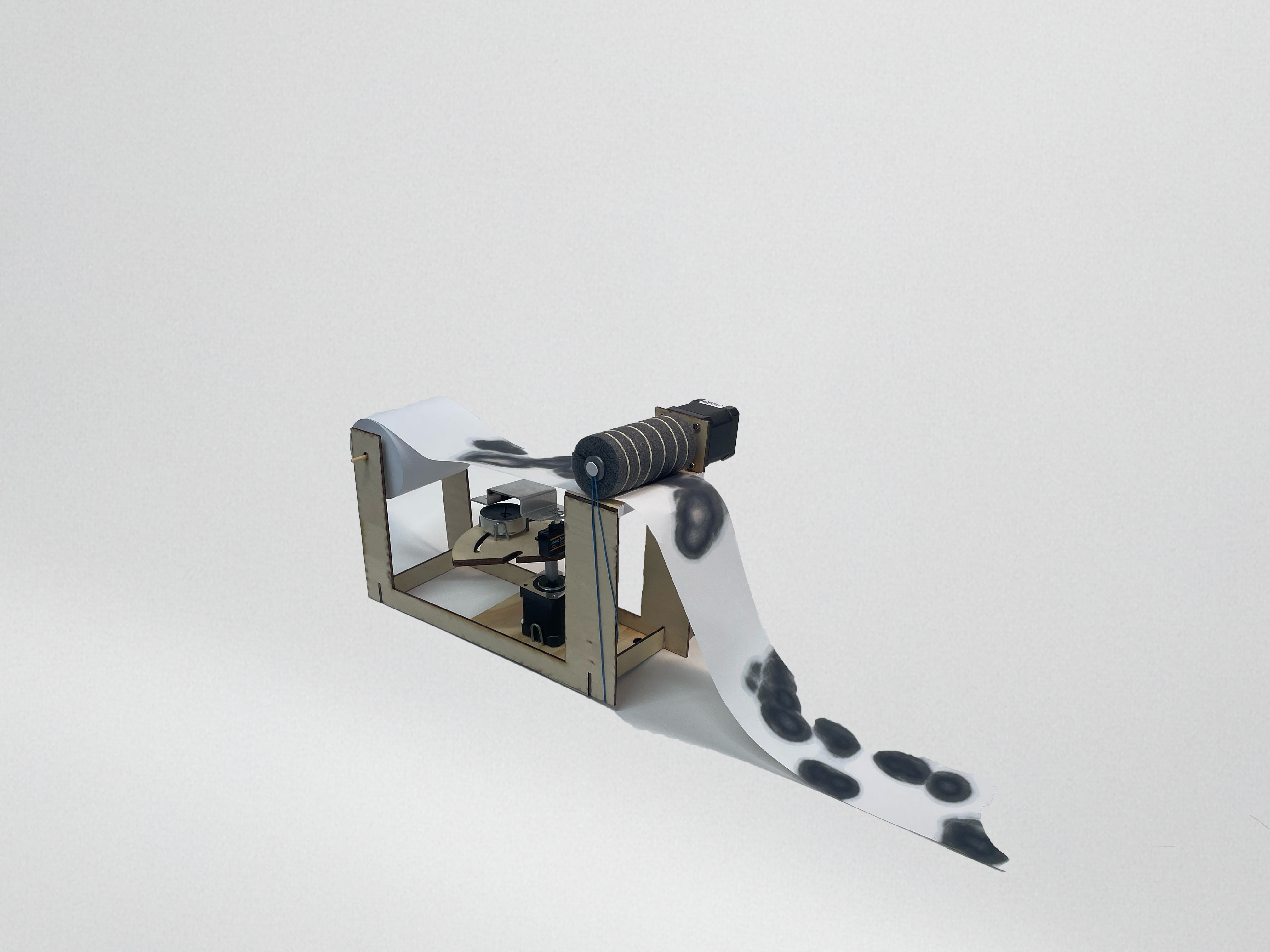
The “Hot Dot” project was developed during a week-long workshop in the Mechatronics course. Together with a partner, I designed a device that uses a tea light, thermal paper, and Arduino-controlled motors to create unique patterns on the paper at random intervals. In this way, the project combines mechanical engineering with experimental design to produce an exciting prototype in a short period of time.
Concept
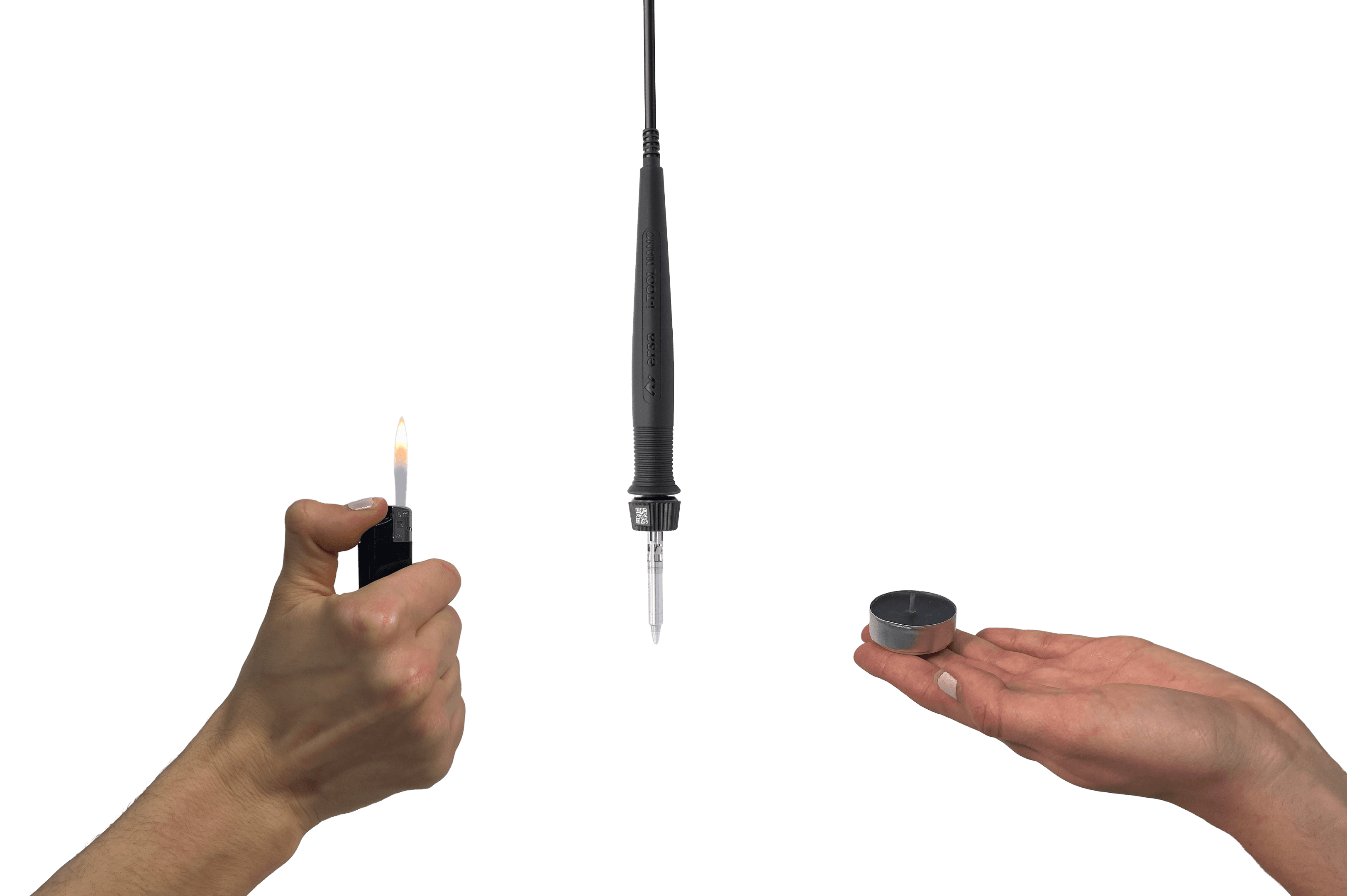
Our basic idea was to experiment with drawing using thermal paper and heat. After initial trials with a soldering iron and a lighter, we opted for an open flame as a simple, reliably controllable heat source. We wanted the resulting marks to appear organic and unique, and the “Hot Dot” achieves this effect through randomized control of the arm and the heat.
Design
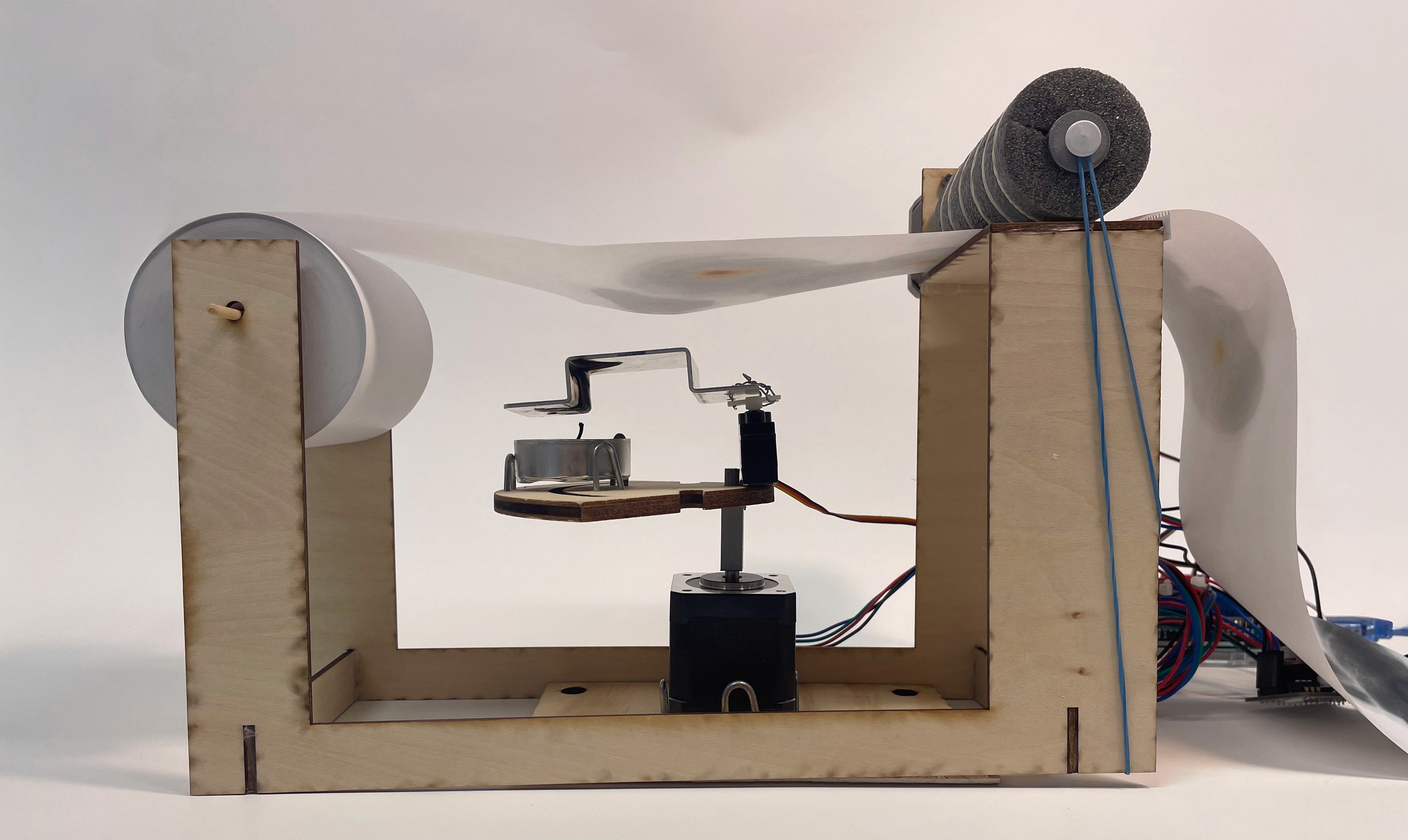
The device consists of a holder for the receipt roll, two stepper motors, a servo motor, and an Arduino. The thermal paper is pulled forward by a motor at controlled intervals. A fireproof metal plate on the servo can mechanically cover or expose the flame to allow the heat to act randomly on the paper. The design ensures that the paper is held taut—inspired by technical elements used in everyday life.
Visuals
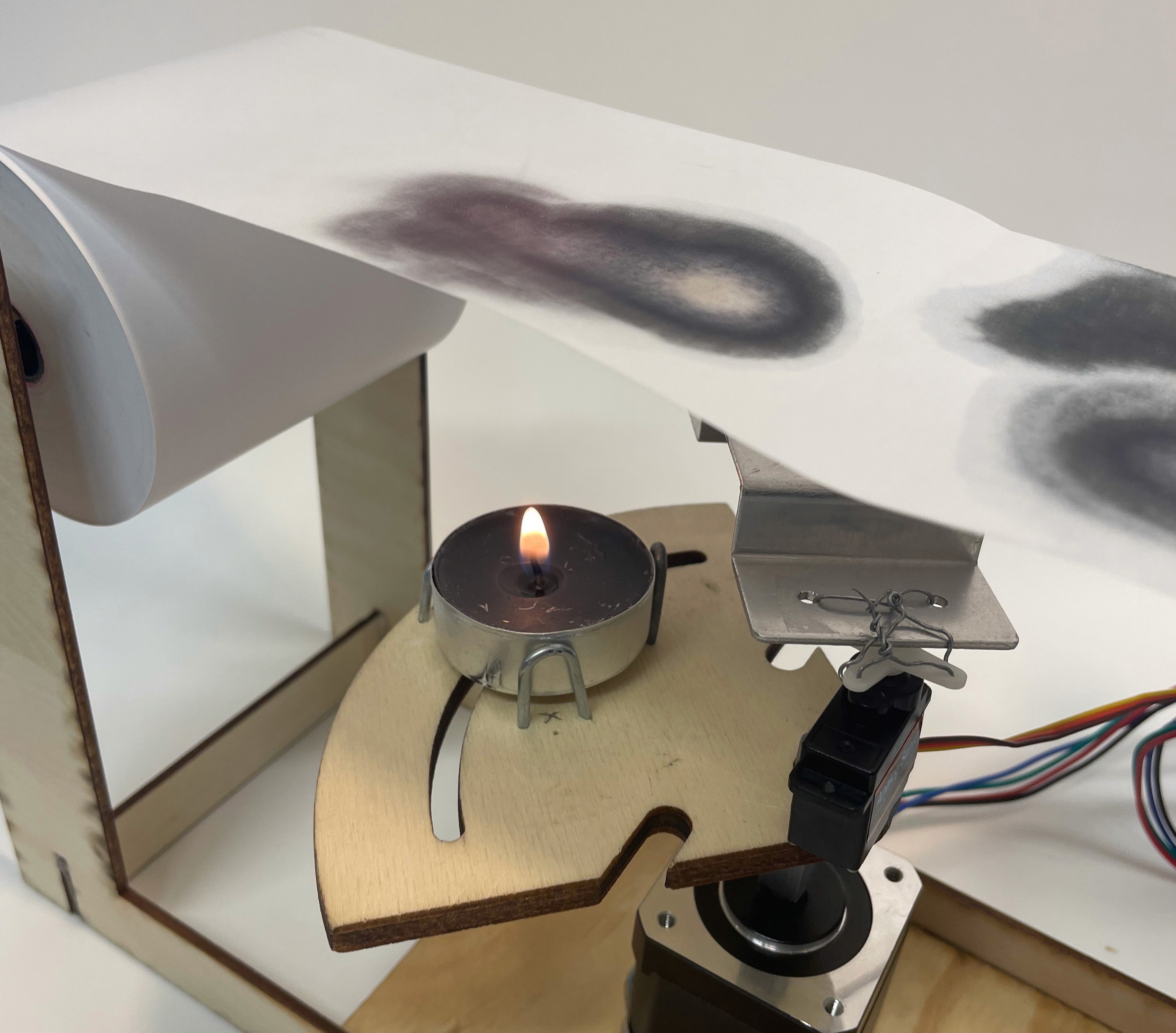
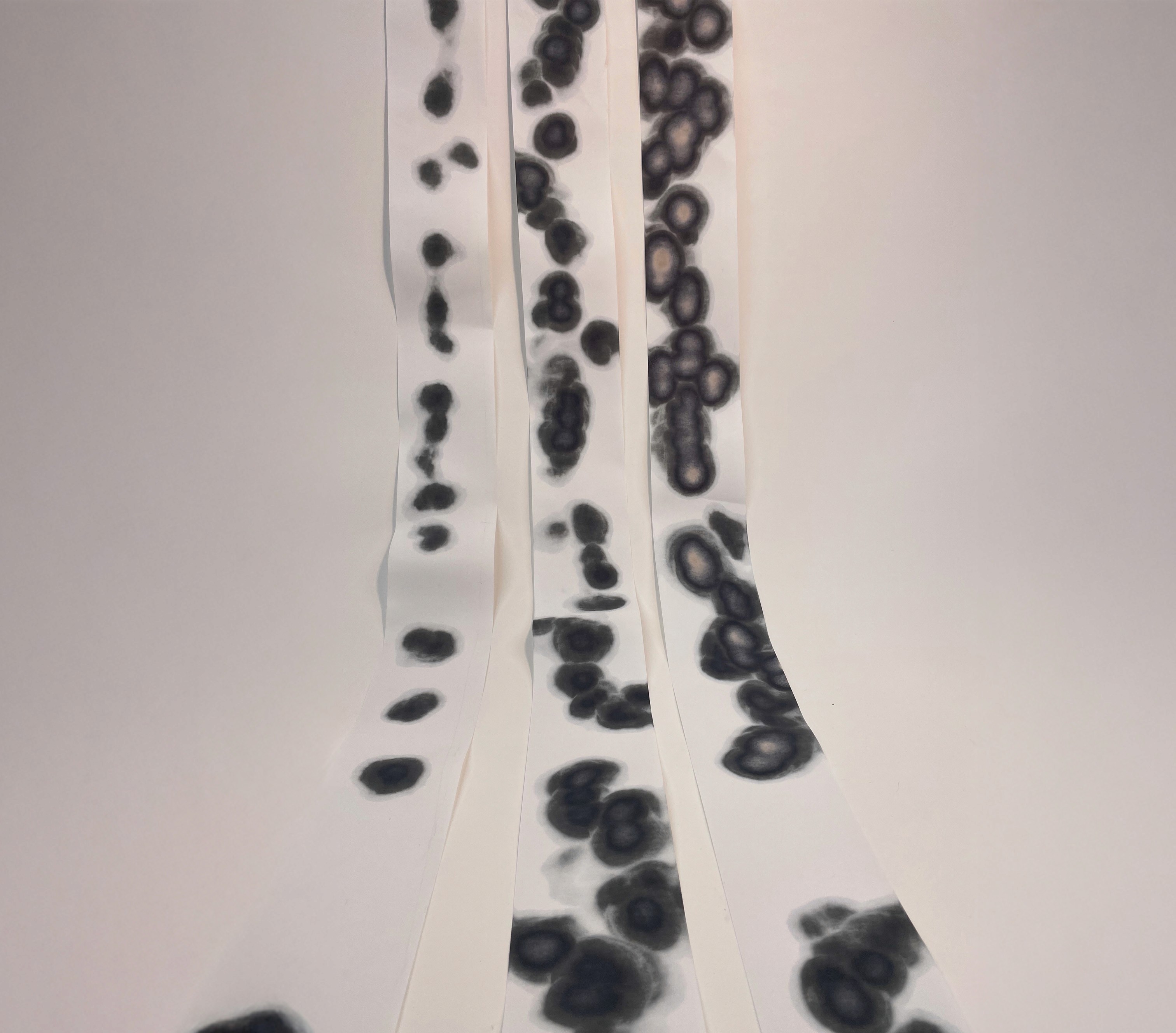
The result is black dots and patterns created by the heat on the white thermal paper. The positions and time intervals are controlled randomly, making each drawing unique and ensuring that the visual result always varies.
Learnings
Through this project, we were able to explore the possibilities of prototyping with Arduino, stepper motors, and servo motors in a hands-on way. Experimenting with different heat sources was particularly instructive, as was discovering how mechanical engineering and programming can be combined to create innovative design methods. This experience highlighted the importance of not just planning theoretically, but also putting our own ideas into practice right away.